Soundstalker Expeditions
Free Sample Lesson:
Material Science Path
Lesson 1: The Voice That Traveled
How do you send a message when your voice can’t carry it?
ES: “Every solution begins the same way: There’s a problem, some resources, and an opportunity. Not always the best resources. Not always enough. But what they have. Innovation happens at the confluence of those three things — need, opportunity, and what’s in your hands.”
“In this path, we deconstruct those choices. We take this tool apart — not with tools, with questions. And when we’re done, you’ll never look at any engineered solution the same way again.”
“Before we start — think about something you use every day. Your phone. Your headphones. Your bicycle. You use it without thinking about why it works. By the end of this path, you won’t be able to do that anymore.
Let’s begin.”


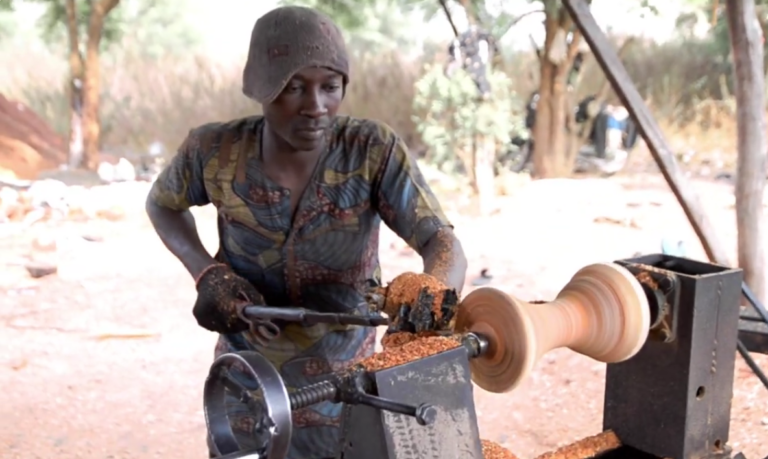


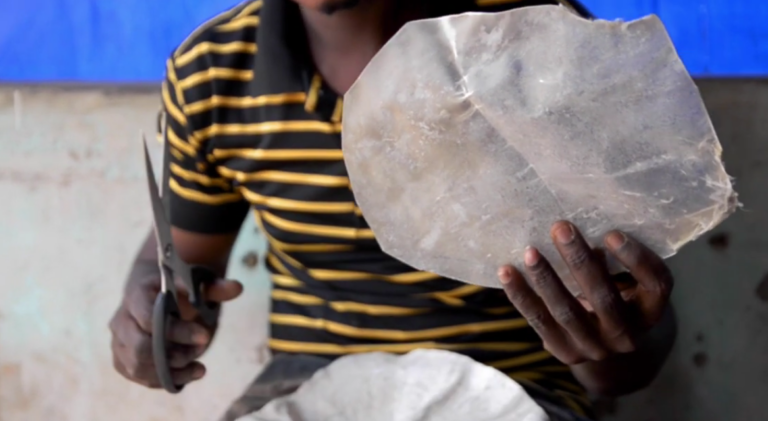
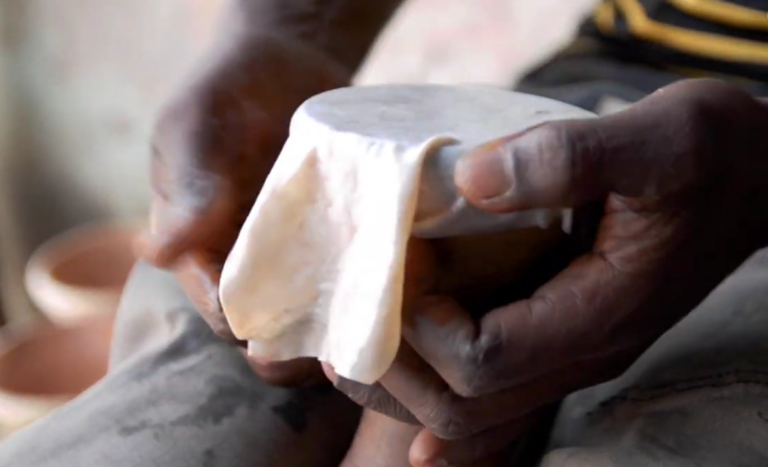

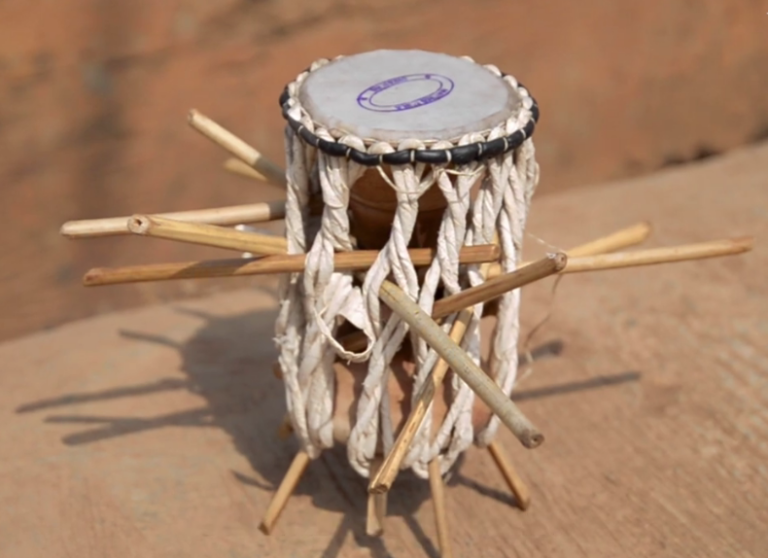
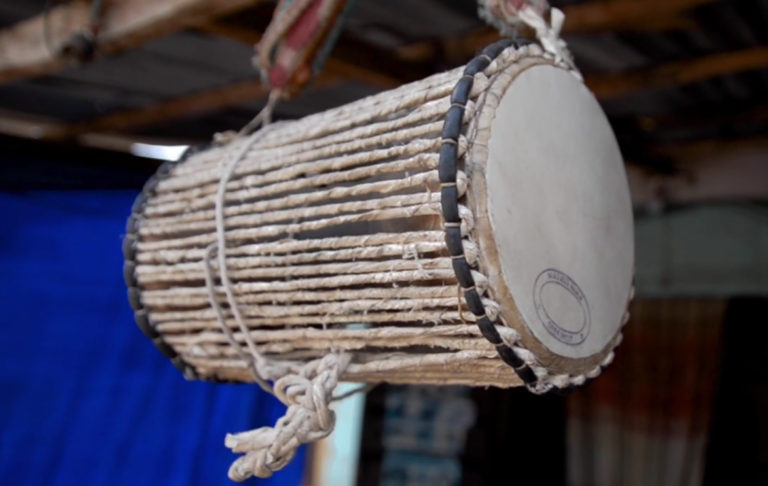
Activity 1: The Vibrating Membrane
ES: “The engineering starts with the skin. The magic does too. Everything about the sound — pitch, clarity, how far it carries — begins here. Your mission: understand why goat skin, and not something else.
By the end of this path, I want you to be able to look at any drumhead and say, ‘I know what you were built to do.”
“What’s your instinct? What material would you reach for if you needed a membrane that could change pitch rapidly? Write it down. We’ll come back to it.”
NOTE: Click Submit to save your response.
M1L1.MS-A1a-Notes
READING: The Physics of the Talking Drumhead
Why Skin Matters
Every sound you hear is a vibration traveling through air. When you strike a drum, you’re not really hitting the drum — you’re setting a membrane in motion, and that membrane pushes the air around it, creating pressure waves that travel to your ear.
But not all membranes vibrate the same way. Three properties determine how a drumhead behaves:
- Tension — How tightly the skin is stretched
- Density — How much mass the skin has per unit of area
- Thickness — How stiff the material is
Change any one of these, and you change the sound.
A Note from Dr. Soundstalker:
“Before we go further, I want to give you a tool that scientists use to classify any object that produces sound. In 1914, two German scholars — Curt Sachs and Erich von Hornbostel — applied the same systematic logic that botanists use to classify plants and chemists use to classify elements to every sound-producing device on Earth. Their system organizes instruments into five categories based on one question: what vibrates to make the sound? In a membranophone — the category our dundun belongs to — the answer is a stretched membrane. In an idiophone, the instrument’s own body vibrates. Chordophones use strings. Aerophones use air columns. This framework will serve you across the first two lessons of this expedition. More importantly, it trains a habit of mind: before you ask what does this make? — ask what moves? That question cuts to the physics of any technology, musical or otherwise.”
The Science of Vibration
When a drumhead vibrates, it doesn’t just move up and down in one piece. It moves in complex patterns called modes. The simplest mode — called the fundamental — is when the entire membrane moves outward and inward as one unit. This produces the lowest pitch the drum can make at that tension.
Higher modes divide the membrane into sections that vibrate in opposite directions. These produce higher pitches called overtones. The mix of fundamental and overtones gives a drum its characteristic sound — its timbre.
The key principle: the higher the tension, the higher the pitch. The denser or thicker the material, the lower the pitch. The player uses this directly — by changing the tension on the dundun playing head in real time, they change the pitch in real time. That’s the mechanism that makes speech possible.
Don’t let this slow you down, but if numbers are your thing, mathematically, the relationship looks like this:

Where:
- f = frequency (pitch)
- T = tension
- σ = surface density (mass per unit area)
This tells us two important things:
- Increase tension → pitch goes up (but not linearly — because of the square root)
- Increase density or thickness → pitch goes down
Why Goat Skin?
Not all animal skins are created equal. The differences come down to biology — specifically, the structure of collagen, the protein that gives skin its strength and flexibility.
Goat skin has fine, interwoven collagen bundles. This creates a membrane that is:
- Thin — low surface density
- Flexible — low resistance to bending
- Elastic — returns to its original shape quickly after being stretched
These properties make goat skin ideal for this communication technology:
- Low density means it vibrates easily at higher frequencies
- High elasticity means it responds quickly to changes in tension
- Thinness means the operator can change the pitch rapidly by squeezing the cords
Cow hide has thicker, more parallel collagen bundles. This creates a membrane that is:
- Thick — high surface density
- Stiff — high resistance to bending
- Durable — resists tearing and deformation
These properties make cow hide excellent for bass drums, where you want a deep, consistent tone that sustains. But for a talking drum — where you need to change pitch rapidly and precisely — cow hide is too stiff and too heavy to respond quickly to tension changes. It can’t follow a conversation.
The Trade-Off
No material gives you everything. Goat skin’s elasticity comes at a cost: it’s less durable than cow hide. It’s more sensitive to humidity and temperature.
It needs more frequent replacement.
The original makers understood this trade-off and accepted it. They chose the material that solved their problem — rapid pitch modulation for speech mimicry — even though it meant sacrificing durability.
Write that down: best versus right. A material scientist doesn’t ask which material is best. They ask which material is right for this job. That distinction will serve you far beyond this expedition.
NOTE:
Write your answers in the boxes below. When you’re finished, be sure to click Submit at the bottom so your work is saved and your parent can review it.
M1L1.MS-A1 - Notes
| Property | Goat Skin | Cow Hide | |
|---|---|---|---|
| Tensile Strength | |||
| Elasticity | |||
| Durability | |||
Activity 2: The Resonant Chamber
ES: “A vibrating membrane makes a sound. But a shell turns that sound into a voice. The hourglass shape isn’t decorative — it’s engineering. Your mission: understand what that shape does, and why it matters.”
“A court drummer in the Bono kingdom didn’t know the mathematics of resonance. But he knew — from years of training — that this shell carried his message farther and clearer than any other shape. The physics didn’t care whether he understood it. It worked anyway. Your job is to understand what he only felt.”

READING: The Architecture of Sound
From Noise to Signal
A drumhead vibrating in open air makes sound. But it’s not a very impressive sound — thin, quiet, and quick to fade. The energy dissipates in all directions. No focus. No projection. No sustain.
To turn that vibration into something useful — something that carries over distance with clarity — you need a resonant chamber.
A resonant chamber is an enclosed space that reinforces certain frequencies while suppressing others. When the drumhead vibrates, it pushes air into the chamber. That air bounces off the walls, creating standing waves — patterns of reinforcement and cancellation that shape the sound.
The drumhead provides the raw energy. The chamber shapes that energy into a signal.
Why Shape Matters
Not all chambers are created equal. The shape of the chamber determines three things:
- Which frequencies get reinforced
- How the sound projects
- How long the sound sustains
Three strategies compared:
The Cylinder (Western Snare Drum)
A cylinder is essentially a tube. Sound bounces between the two heads. The parallel walls create multiple reflections that reinforce a broad range of frequencies. Result: a loud, sharp, relatively unpitched sound. Excellent for rhythm — you can hear the attack clearly — but it doesn’t produce a sustained, recognizable pitch. Designed to cut through an ensemble, not to carry a melody or a message.
The Bowl (Djembe)
The djembe’s body is a goblet shape — wide head opening into a narrow waist, then flaring at the base. This creates Helmholtz resonance, where air in the narrow waist acts like a spring and the larger cavity acts like a weight. Result: a rich, complex sound with strong bass frequencies and pronounced overtones. But each tone is relatively fixed. You can’t change the pitch of a djembe tone by squeezing the shell. Designed for tonal variety within a single strike, not pitch modulation between strikes.
The Hourglass (Dundun)
The dundun’s hourglass shape creates a chamber with two key properties. First, the narrow waist creates a bottleneck that compresses air as it moves through, amplifying the mid-range frequencies that correspond to human speech. Second, the two chambers on each side of the waist create coupled resonance — the air resonates in the first chamber, passes through the waist, and resonates in the second. This coupling creates a sustained, focused tone that projects outward through the open end.
Result: a clear, pitched sound that carries over distance with minimal loss of clarity. The hourglass doesn’t just amplify — it focuses, shaping broad-spectrum vibration into a narrow-band signal optimized for the frequencies of human speech.
The System Principle
Here’s the deeper insight: the dundun isn’t one thing. It’s a system — a set of components that work together to produce an effect no single component could achieve alone.
Every acoustic system has three parts:
- The Driver — The component that initiates the sound (the drumhead, struck by hand or stick)
- The Resonator — The component that vibrates in sympathy, reinforcing certain frequencies (the air inside the chamber)
- The Amplifier — The component that projects and shapes the sound outward (the shell and its opening)
Remove any one of these, and the system degrades. The innovation isn’t any single component. It’s the integration.
Write that down: most people ask how a tool sounds. A systems thinker asks how each component serves the whole. Those are completely different questions — and they lead to completely different understanding.
Energy and Loss
No system is perfectly efficient. Some energy is always lost — converted to heat, absorbed by the shell walls, or radiated in unhelpful directions.
But some losses are useful. The shell walls absorb certain frequencies more than others. By selectively absorbing some frequencies and reinforcing others, the shell acts as a filter, shaping the raw vibration of the membrane into the clean, focused signal that emerges from the open end.
This tool doesn’t try to preserve all the sound the membrane makes. It preserves the right sound — and discards the rest.
M1L1.MS-A2 - Notes
Activity 3: The Physics of Pitch — and the Art of the Master
ES: “This is where the dundun stops being a drum and starts being a voice. The tension cords allow the player to change the pitch in real time — continuously, like the human vocal cords. Analog technology at its most elegant. Your mission: prove the physics, then watch it come alive.”
THE MISSION –Interact
Use the interactive slider below. Move the slider to tighten the cords. Watch what happens to the pitch.
M1L1.MS-A3b - Notes
| Tension Level | Estimated Frequency | Supports Formula |
|---|---|---|
| Low | ||
| Medium | ||
| Medium-High | ||
| High |
M1L1.MS-A3c - Notes
| Component | Function | In the Talking Drum |
|---|---|---|
| Encoder | Translated the message into a transmittable form | The drummer, who converts spoken words into drum tones |
| Transmitter | Carries the signal from sender to receiver | The drum itself, projecting sound waves across distance |
| Decoder | Receives the signal and interprets it back into meaning | The listener, who converts drum tones back into words |
M1L1.MS-A3d - Notes
M1L1.MS-A3e - Notes
Activity 3: The Tension Test
What you need:
- Any container with a flexible plastic lid — a coffee can, Tupperware, a ziplock container, anything that seals
- Your hands
What you do:
- With the lid sealed, tap lightly on the lid as if playing a drum. Listen to the pitch. Get a feel for the sound.
- Place the index finger of your other hand halfway between the center and the edge of the lid. Press lightly. Tap again with your tapping hand. What happens to the pitch?
- Press harder with that finger. Keep tapping. What happens now?
- Try this: Tap a steady beat with one hand. With your other hand, press and release — light, medium, hard — in rhythm with your tapping. Can you make the pitch “talk”? Rise and fall? Sound like a question? Sound like an answer?
What this teaches:
The dundun’s membrane works the same way. When the player squeezes the cords, the membrane stretches tighter — just like your plastic lid when you press down. The tighter the membrane, the higher the pitch.
But here’s what this experiment reveals that reading alone can’t: the player does two things at once. One hand maintains the rhythm. The other hand controls the meaning. The beat carries the structure. The tension carries the message.
That’s the engineering genius of this tool. It’s a dual-control system — rhythm in one hand, pitch in the other, language in the space between them.
Material Science Path — Close
ES: “You’ve deconstructed this tool from the membrane to the shell to the tension mechanism. You understand what it’s made of, how those materials work together, and why the physics of vibration makes speech possible.”
“But a tool is just a tool until people give it meaning. A hammer doesn’t build a house. This technology didn’t speak a language until people decided what it would say — and who would be allowed to say it.”
“That’s a 3,000-year story. And it starts much earlier than the first kingdom.”
“Record your field notes. Select the Cultural Systems Path…”
 Next, Cultural Systems Path
Link to Parent/Teacher Guide